Cycle Syncing Isn’t a Trend. It’s a Practice of Listening to Your Body.
I’ll be honest. I don’t even love the term cycle syncing.
It’s become trendy, overused, and in a lot of ways, overcomplicated. But it’s also a great doorway for women who are trying to understand their bodies more, so let’s talk about it!
When I talk about cycle syncing, I’m not talking about rigid rules, protocols, or checklists. I’m talking about learning how to work with your body instead of unknowingly fighting against it.
Because the truth is, your body changes throughout your cycle. Your metabolism, brain chemistry, mood, motivation, creativity, and energy all shift across the month. And when you’re unaware of those shifts, you can end up accidentally working against yourself without realizing it.
This post is for women who feel tired.
Disconnected from their body.
Foggy headed.
Irritable before their period.
Dragging no matter how much they sleep.
& like there just aren’t enough hours in the day.
Not because something is wrong with you, but because you’re trying to live in a way that ignores how their body actually works.
Working Against Your Own Body Is Exhausting
So many women push through fatigue, force productivity and are left wondering why they can’t lose weight, get stronger, or feel clear and energized no matter what they do. They’re frustrated with mood swings, headaches, period pain, and that constant sense of always being behind.
What’s often missing isn’t another supplement, plan, or strategy. It’s awareness of what’s happening.
Your body is constantly shifting, and when you’re unaware of those shifts, you unknowingly override your needs. When you do start working with your body’s natural ebbs and flows, it often unlocks more energy, better mood, improved health, and more success across multiple areas of life. Not by doing more, but by doing things in alignment.
The Only Constant In The Female Body Is Change
This is one of the most important things to understand- your body is not meant to feel the same every day.
Trying to force consistency in a system that’s designed for change leads to burnout. (Especially for busy, high-achieving women who are used to pushing through no matter what.)
Your menstrual cycle moves through four phases, and I love to see them as the seasons:
Menstrual Phase as Winter
This phase marks the start of a new cycle and often brings the lowest energy. The body is naturally turning inward, asking for rest, reflection, and a slower pace. When this need for rest is ignored or overridden, it’s common to feel depleted or disconnected.
Follicular Phase as Spring
As the body begins to rebuild, energy and motivation often return. Many women notice increased energy, creativity, and mental clarity here. This phase can feel supportive for planning, initiating new ideas, and gentle forward momentum.
Ovulation as Summer
Ovulation often represents a peak in outward energy. Communication, connection, confidence, and productivity tend to feel more accessible during this time. When earlier phases are honored, this phase often feels expansive rather than exhausting.
Luteal Phase as Autumn
After ovulation, energy begins to shift again. This phase often brings more discernment and intuition, along with a gradual need for more rest and nourishment. It’s a time that can support boundaries, completion, and turning inward before the next cycle begins.
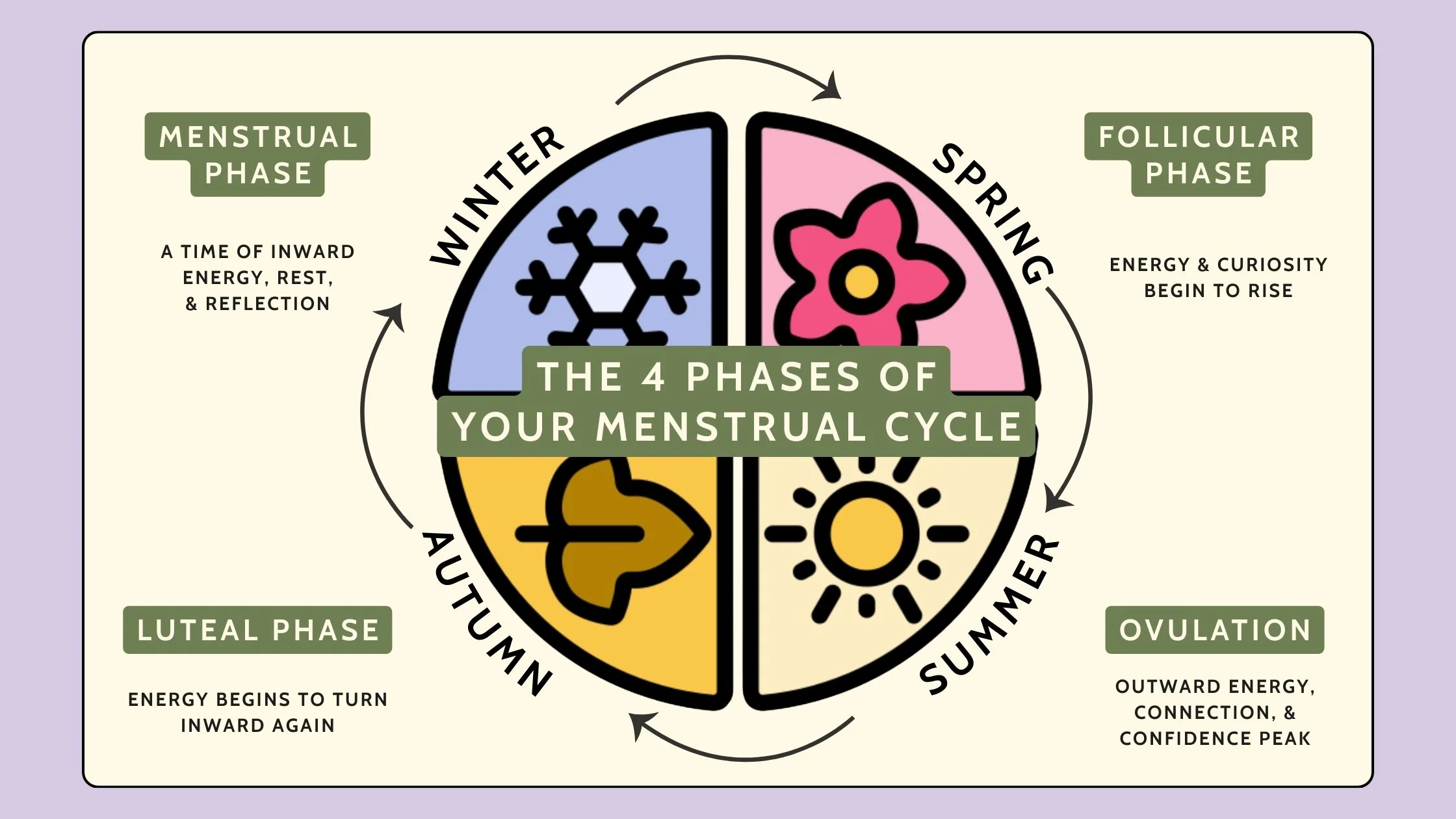
Each phase has a different biological focus. Each one supports different types of energy, motivation, and output. When you expect yourself to function the same way in every phase, you end up fighting your own physiology.
Rest Is Not Lost Time
One of the biggest mindset shifts for women women is understanding that resting when your body needs rest actually makes you more productive. This can feel counterintuitive, especially if you’re used to measuring your worth by how much you get done. But overriding your body’s signals doesn’t create more output. It usually creates more resistance, more fatigue, and more frustration. When you allow yourself to rest when rest is biologically supported, you often save time in the long run. You think more clearly, work more efficiently and recover faster. This isn’t about doing less forever. It’s about timing.
Connecting to Your Body Doesn’t Need Rules
In the world of cycle syncing, I see a lot of over complication. It’s quickly become a set of protocols and another thing you feel like you have on your to do lit. Specific instructions that make women feel like they’re failing if they don’t follow everything perfectly. That’s not what this is meant to be.
Cycle syncing is less about following a checklist and more about exploring, observing, and getting to know your own internal rhythms within the context of understanding hormonal fluctuations. It’s an inner nuance that strengthens over time as you tune into your body. And it’s important to know that this experience can shift throughout the seasons of your life too. Stress, environment, workload, and life circumstances all matter. Awareness comes first and everything else builds from there.
Awareness Is Medicinal
Even if you don’t change anything right away (or ever), awareness alone can be powerful. Knowing where you are in your cycle and understanding why your energy ebbs and flows can completely change how you relate to yourself. Instead of thinking something is wrong with you, you understand why you felt like you were firing on all cylinders last week and feel completely different this week. Awareness helps you see that there’s nothing wrong with you.
How Cycle Syncing Can Help Your Relationships
One thing I’ve found to be incredibly supportive is inviting your partner into this understanding as well.
When the people closest to you understand your ebbs and flows, it often creates better communication, more support, and a more functional team dynamic.
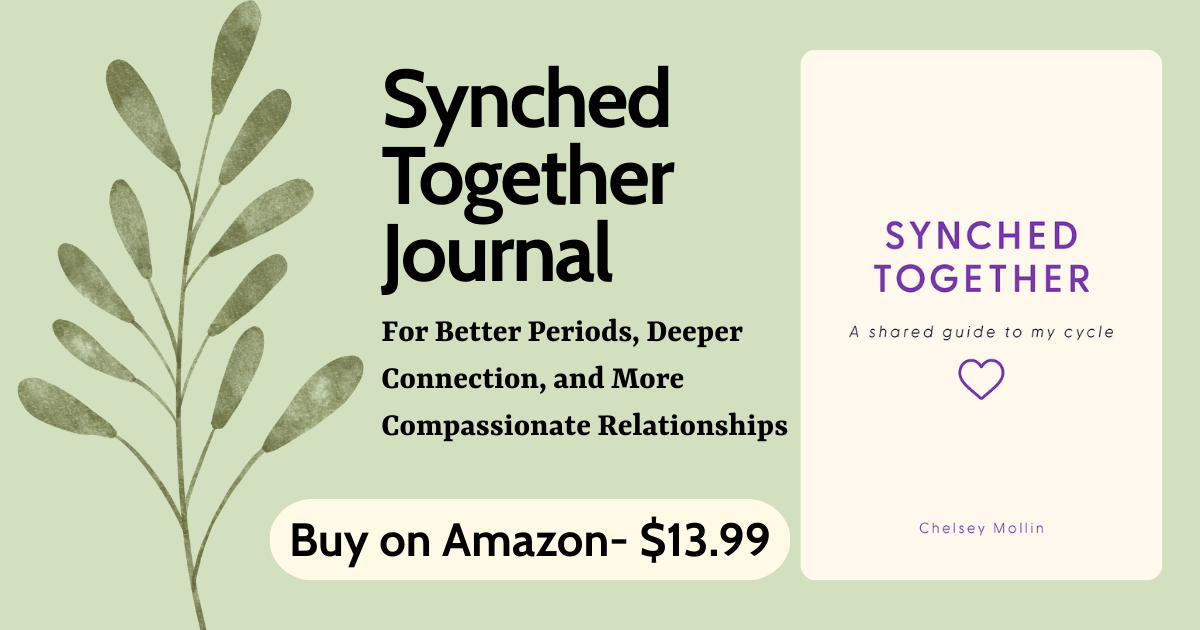
If that’s something you want to explore, I created the Synched Together Journal to help partners understand and work with these rhythms together.
Key Takeaway On Cycle Syncing
You are designed to feel good. Cycle syncing isn’t about fixing yourself or optimizing every moment of your life. It’s about listening, observing and knowing yourself.
Disclaimer:
The information provided in this blog is for educational purposes only and is not intended to be taken as medical advice nor to diagnose, treat, or cure disease. Please consult your medical provider before making any changes to your healthcare.
